When it comes to creating impactful music, self-awareness is an artist’s secret superpower. As someone who’s spent years working closely with musicians in studio environments, I’ve seen firsthand how knowing yourself as an artist can completely transform the music you create. Many musicians might not realize it, especially early in their careers, but knowing who you are, really knowing yourself, and being honest about it can be a game-changer.
Self-awareness isn’t about ego or over-introspection. It’s about clarity. It’s about understanding your emotional landscape, your instincts, your limitations, and your strengths. Artists who lack this clarity often chase sounds, trends, or external validation. Artists who possess it move with intention.
And intention changes everything.
Self-Awareness as Creative Direction
Self-awareness gives artists direction. It helps them tap into their own emotions, experiences, and truths, turning raw feelings into relatable, powerful music. Instead of forcing ideas or fighting writer’s block, self-aware artists draw directly from their lived reality. Their work becomes less about trying to “make something good” and more about expressing something real.
This is where creative flow often emerges.
When an artist understands what they’re trying to say, and more importantly why they’re saying it, the creative process becomes less friction-heavy. Decisions become easier. Song selection, production choices, lyrical tone, even vocal delivery all begin to align around a central emotional truth.
Without self-awareness, artists often feel scattered. With it, even minimal ideas can feel potent.
Why Timeless Music Feels Familiar
Think about it: songs that stand the test of time often do so because they tap into universal emotions. Even if an artist’s personal story is unique, the feelings of love, loss, insecurity, hope, longing, or triumph are things we all recognize.
That familiarity is what creates resonance.
Listeners don’t fall in love with songs because they’re impressed, they fall in love because they feel understood. When an artist articulates something a listener has felt but couldn’t quite put into words, a bond forms. That bond is what turns a casual listener into a lifelong fan.
Self-awareness allows artists to locate those emotional truths and present them clearly, without distortion.
Ye : Risk, Belief, and Identity
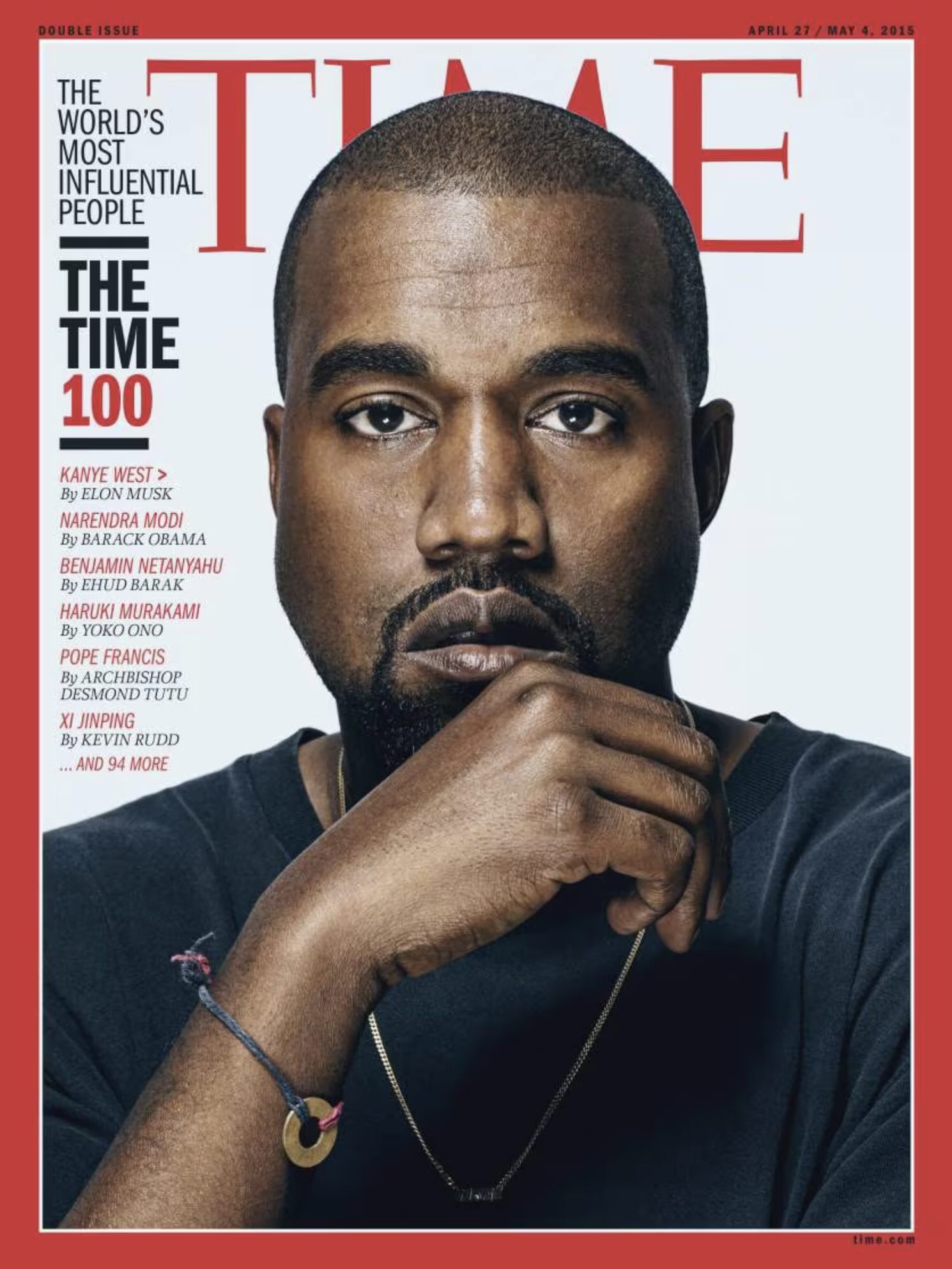
Take Ye (fka Kanye West), for example. From the very beginning of his career, Ye has been incredibly self-aware, openly weaving his personal struggles, beliefs, and contradictions into his music.
Look at Jesus Walks from his debut album, The College Dropout. At a time when mainstream hip-hop wasn’t exactly a space for open discussions about religion, Ye took a risk. He didn’t soften the message. He didn’t hide behind a Guy Fawkes. He’s revealed who he is and what he’s believed throughout his adult life via his music.
That decision wasn’t just bold, it was self-aware to some degree.
Ye understood that authenticity, even when polarizing, would differentiate him. And it has for 21 years. Jesus Walks wasn’t just a hit; it was a statement. It helped define his artistic identity early on and set the tone for a career built on personal conviction rather than conformity.
Self-awareness gave Ye permission to stand alone.
Guess you can’t tell him nothin’ rightttt?!?!
Frank Ocean: Vulnerability as Amplifier
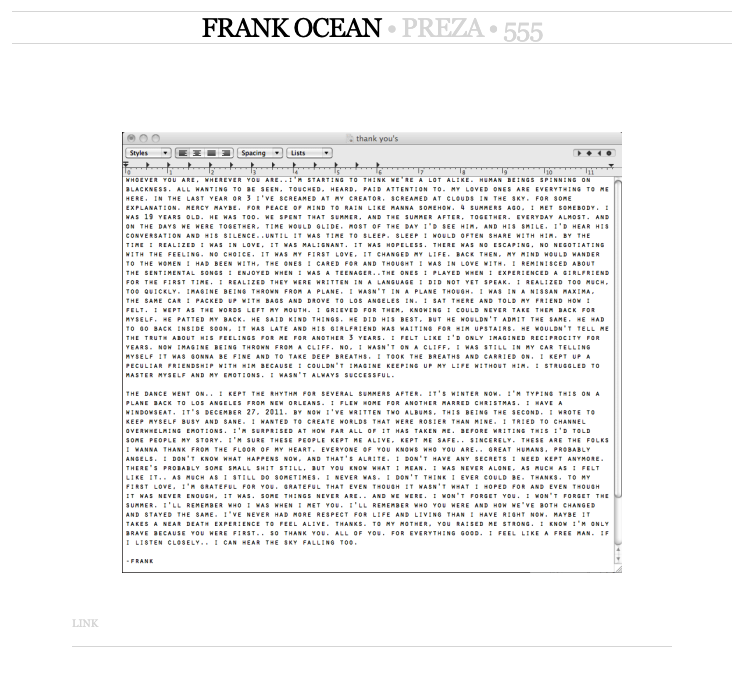
Then there’s Frank Ocean. Just before releasing his debut studio album Channel Orange in 2012, Frank published a deeply personal letter on Tumblr revealing that his first love had been a man. It was context that served as marketing, world building, and rollout lore.
That post served as a written prelude to the album.
In R&B and hip-hop, genres where vulnerability of that kind was still rare, Frank’s honesty reframed how listeners experienced his music. Songs that already felt emotionally rich suddenly carried layer upon layer. The album didn’t change, but the listening experience did.
Frank’s self-awareness didn’t just define his music; it amplified it, gave it depth beyond imagination!
Every listener might not share his exact story, but they connected deeply to the emotional clarity and truth behind his work. That’s the power of vulnerability rooted in self-awareness: it can invite empathy without asking for permission.
Drake: Doubling Down on Identity
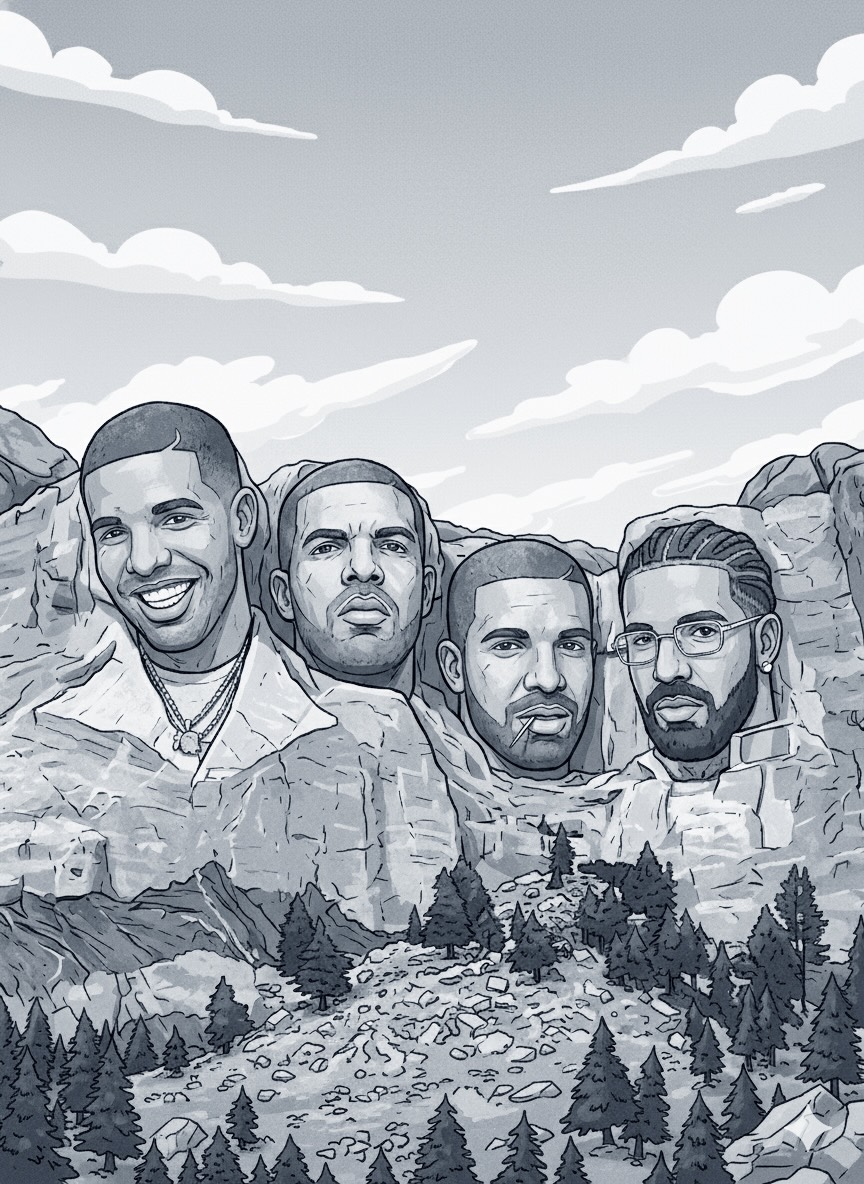
Another powerful example of self-awareness shaping an entire career is Drake.
Early on, Drake recognized something important about himself: he loved hip-hop, but he also loved singing, and he wanted to do both himself. That might sound obvious now, but at the time, it was unconventional.
Historically, artists like Ja Rule would rely on R&B features from singers like Ashanti to achieve that melodic balance. Drake chose a different path. He didn’t outsource the emotional moments, he did those too.
When Drake began blending rapping and singing on his own records around 2006–2007, he faced heavy criticism. People questioned his authenticity, labeled him “too soft,” or claimed he was more of an R&B artist than a rapper.
But here’s where self-awareness becomes crucial.
Drake understood who he was and doubled down despite the noise. What initially felt like a liability became the foundation of his musical identity. That decision allowed him to carve out his own lane.He ran hip hop for more than 15 years. A feat that countless artists would later attempt with no luck.
Self-awareness didn’t make the criticism disappear. It made it irrelevant the entire time.
How to Build Self-Awareness as a Musician
If you want self-awareness to actually show up in your music, you need frameworks to find your truth and translate it into art. Below are a few ideas to get you started:
Track the themes you can’t stop writing about
If your lyrics keep circling the same emotions, that is not a flaw. That is your signal.
Write from a specific moment, not a general mood
“I was hurt” is vague. “I read that message in the parking lot and felt my stomach drop” paints a picture and invokes a reaction.
Record voice notes when emotions hit
The car is perfect for this. Your raw thoughts usually show up before you intellectualize them.
Name your lane in one sentence
What do you do better than most artists in your space? Melodies, honesty, humor, aggression, detail, vulnerability, cadence. Highlight that muscle and develop it, train it.
Highlight the honest lines
After a writing session, go back and mark the lines that made you feel exposed. Those lines usually carry the song.
Ask a simple question to two people you trust
“What emotion do you feel when you hear my music?” If two people give you the same answer, that is identity data.
Practice restraint
You do not need to tell your whole story on the first project. Your career is the timeline.
Standing Out Is a Consequence, Not the Goal
What’s interesting is that Ye, Frank Ocean, and Drake, through very different paths, each carved out a distinct lane for themselves. That uniqueness wasn’t accidental. It wasn’t engineered by trend forecasting or branding meetings.
It was a byproduct of self-awareness.
Whether consciously or subconsciously, understanding themselves made it easier for each artist to stand out rather than blend in. They weren’t trying to be different, they were trying to be honest. Difference followed naturally.
That’s an important distinction for emerging artists to understand.
The Discipline of Restraint
That said, self-awareness doesn’t mean overexposure.
Artists don’t need to tell their entire life story in their first song or album. Vulnerability without restraint can dilute impact. You have an entire career to unfold your narrative. There’s no rush.
Let the story breathe. Let it evolve.
The Real Outcome of Self-Awareness
In the end, self-awareness allows artists to create music that’s not just a product, but a piece of themselves, a small window into their true nature. It turns songs into mirrors reflecting universal emotions such as love, loss, hope, insecurity, and triumph, emotions, wisdom listeners can see themselves in or learn from.
And that’s what makes fans stick around.
It’s not just about a catchy tune.
It’s about feeling seen.



.svg)